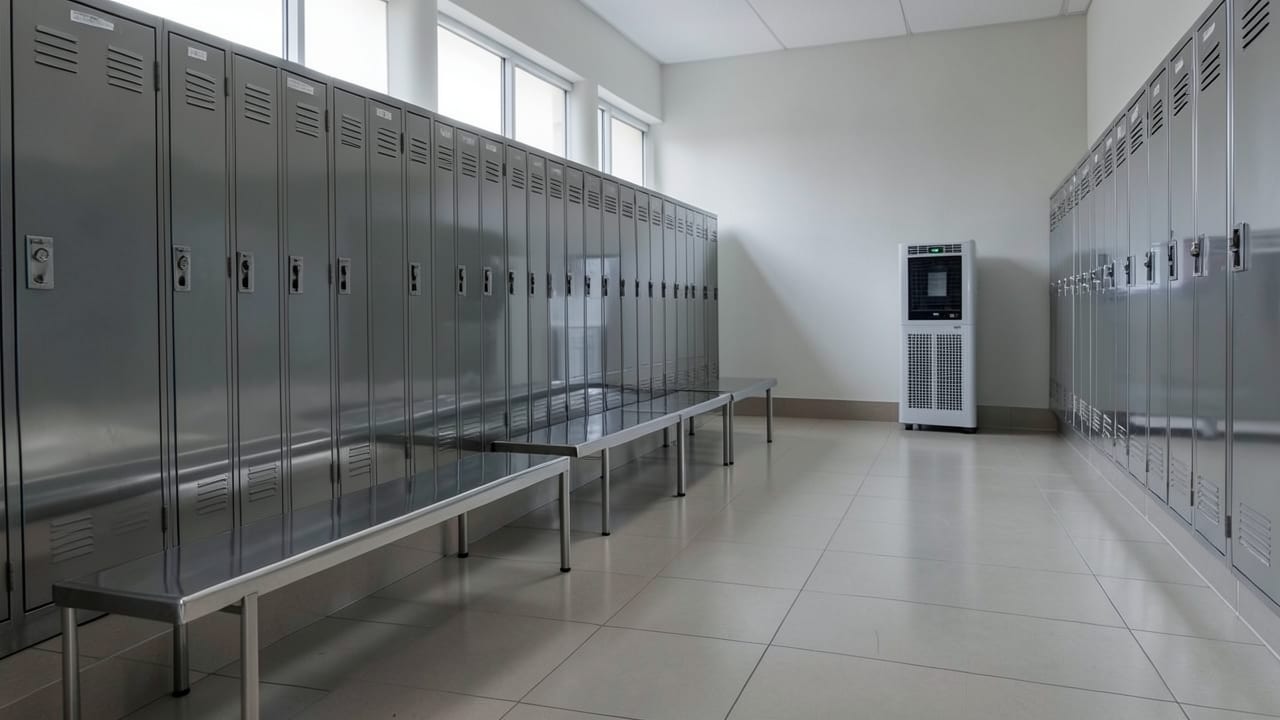
Gym Mold Remediation
Professional removal and treatment of mold in gyms to restore safe, clean environments.
Gym mold remediation in Haverford, PA addresses hidden mold growth in fitness areas, where moisture-prone spaces like equipment rooms, locker areas, and showers can develop dangerous spores. Proper removal requires containment, HEPA filtration, and moisture control to prevent regrowth and health risks.
Local contractors follow Pennsylvania’s Home Improvement Consumer Protection Act (HICPA) for licensed work, ensuring compliance while targeting the root cause of mold.
We also handle Stone Countertop Mold Removal and Stairwell Mold Remediation for Haverford properties.
When to address mold in your home gym
Mold in a home gym often starts small but spreads quickly in damp, poorly ventilated spaces. Signs it’s time for professional remediation include patches larger than 25 square feet, recurring growth after cleaning, or a musty smell with no visible source.
Hidden mold—behind equipment, under flooring, or inside walls—requires specialized tools and containment to avoid spreading spores.
DIY cleaning may remove surface mold, but it rarely addresses moisture sources like leaks, condensation, or poor airflow. Without fixing these, mold regrows within months. A professional assessment determines whether the issue is surface-level or structural, ensuring the right approach.
Signs Your Home Gym Needs Remediation
- Mold covers more than a small, isolated patch (25+ sq ft is a common threshold for professional work).
- Growth keeps returning in the same spot after cleaning, often indicating an unresolved moisture issue.
- A musty smell persists with no visible mold, suggesting hidden growth behind walls, under flooring, or in ductwork.
- You notice mold on non-porous surfaces (e.g., metal equipment, tile) or in hard-to-reach areas like HVAC vents.
What affects cost and timeline?
Pricing for gym mold remediation depends on the square footage affected, containment requirements, and whether hidden moisture sources need repair. Containment, HEPA air scrubbing, and clearance testing are standard but often billed separately. Complex jobs—like mold behind equipment or in ductwork—require additional labor and materials.
Timelines vary based on containment setup, drying time, and clearance testing. A simple surface clean may take a day, while structural remediation (e.g., replacing drywall, treating framing) can stretch to a week or more. Post-remediation humidity checks help confirm the fix lasts longer.
Why containment and testing matter
Containment—using plastic sheeting and negative-air machines—prevents spores from spreading during removal. Without it, disturbed mold can contaminate unaffected areas, turning a small job into a larger one. HEPA vacuums and air scrubbers capture spores that standard equipment misses, reducing health risks.
Clearance testing by an independent lab confirms spore levels return to normal after remediation. Skipping this step leaves uncertainty about whether the mold is truly gone. Post-remediation humidity monitoring helps catch early regrowth before it becomes widespread.
| Step | Why It’s Critical | What Happens Without It |
|---|---|---|
| Containment setup | Seals off work area to prevent spore spread | Spores drift into hallways, HVAC, or other rooms |
| HEPA air scrubbing | Filters spores from the air during removal | Standard vacuums/filters recirculate spores |
| Clearance testing | Verifies spore levels are back to normal | No confirmation mold is fully removed |
| Moisture source repair | Stops regrowth by fixing leaks/condensation | Mold returns within months |
How gym mold remediation works
Professional remediation follows a structured process to safely remove mold and prevent recurrence.
- 1Containment
Plastic sheeting and negative-air machines seal the affected area, creating a controlled zone to contain spores during removal.
- 2Removal
Porous materials (drywall, carpet) are cut out and bagged, while non-porous surfaces (metal, tile) are scrubbed and treated.
- 3HEPA Filtration
Air scrubbers and HEPA vacuums run continuously to capture airborne spores, preventing them from spreading to other areas.
- 4Drying
Industrial dehumidifiers and air movers reduce moisture in framing and subfloors to normal levels before reclosing the space.
- 5Testing
An independent lab tests air or surfaces post-remediation to confirm spore counts are within safe ranges.
Frequently asked questions
Can I clean small mold patches myself, or should I call a professional?
Small, isolated patches (under 25 sq ft) can often be cleaned with vinegar or detergent, but hidden mold or recurring growth signals a need for professional remediation. DIY methods rarely address moisture sources, leading to regrowth.
How do I know if mold is hidden behind walls or under equipment?
Musty smells with no visible mold, condensation on windows or pipes, or mold returning after cleaning often indicate hidden growth. A professional inspection with moisture meters or thermal imaging can pinpoint the source.
Will remediation make my gym smell better immediately?
Odors may improve during remediation, but full elimination depends on removing all mold and fixing moisture issues. Post-remediation humidity checks and ventilation help maintain fresh air long-term.
How long does it take for mold to regrow if the moisture source isn’t fixed?
Without addressing leaks, condensation, or poor airflow, mold can return within weeks to months. Professional remediation includes assessing and repairing moisture sources to reduce recurrence risk.
See Merion Station, PA for more, or explore our full Haverford-area coverage side by side for our complete lineup.
Ready to get started?
Talk to a local mold remediation pro in Haverford — get a written quote.
Other Mold Remediation Services in Haverford
Stone Countertop Mold Removal in Haverford, PA
Professional removal of mold from stone countertops using specialized cleaning and treatment methods.
Learn More
Stairwell Mold Remediation in Haverford, PA
Professional mold removal and prevention in stairwells to restore safe, clean spaces.
Learn More
Balcony Mold Cleanup in Haverford, PA
Professional removal and treatment of mold growth on balconies and adjacent structures.
Learn More
Sunroom Mold Remediation in Haverford, PA
Professional removal and treatment of mold in sunrooms to restore a safe, clean space.
Learn More
Hallway Mold Remediation in Haverford, PA
Professional removal and treatment of mold growth in residential hallways.
Learn More
HOA Mold Remediation in Haverford, PA
Professional mold removal and remediation for HOA properties to restore safe, healthy living conditions.
Learn MoreCommon Questions About Mold Remediation in Haverford
Everything you need to know about mold remediation services in Haverford
How much does Gym Mold Remediation typically cost in Haverford, PA?
Why does Haverford, PA's humidity make mold a bigger risk than in drier regions?
Does homeowners insurance typically cover mold remediation?
Is black mold actually more dangerous than other mold types?
How long does a typical mold remediation job take?
Is it safe to stay in the home during mold remediation?
Need Mold Remediation in Haverford?
Connect with local providers in Haverford for a detailed quote.
⏰ We answer your call • Serving all of Haverford and surrounding areas