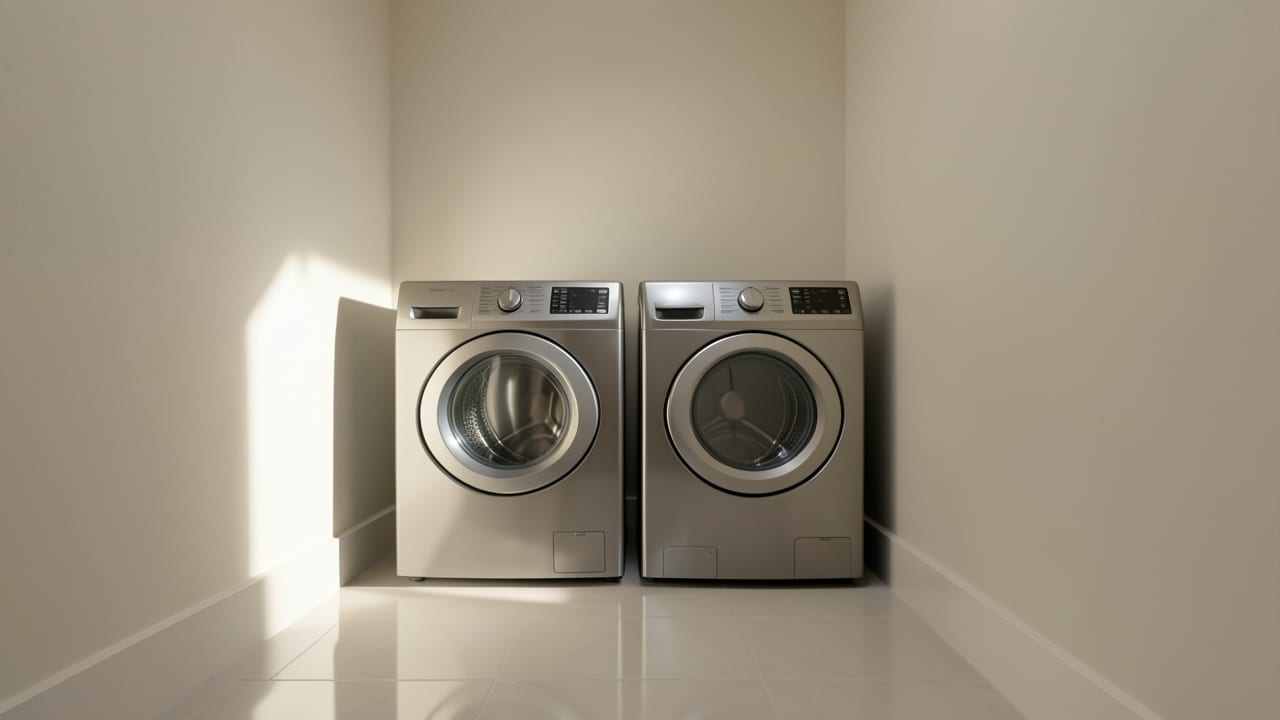
Laundry Room Mold Cleanup
Professional mold removal and remediation in laundry rooms to restore a safe, clean space.
Laundry room mold cleanup in Haverford, PA addresses hidden moisture problems that cause mold growth on walls, floors, and laundry equipment. Without proper containment and removal, spores can spread through HVAC systems or settle in adjacent rooms.
Professional remediation includes sealing the area, removing contaminated materials, and drying structural components to prevent regrowth—all while protecting your home from further contamination.
We also handle Water Damage Restoration and Crawl Space & Basement Mold Remediation for Haverford properties.
When laundry room mold needs professional help
Mold in a laundry room often starts small but can quickly become a larger issue if ignored. Visible signs like black, green, or brown spots on walls, ceilings, or laundry machines are the most obvious, but hidden growth—behind appliances, under flooring, or inside walls—can worsen without proper inspection.
If mold covers more than a small, isolated patch (roughly 25 square feet or larger), or keeps returning after cleaning, professional remediation is typically the safest choice.
Musty odors that persist even after cleaning or worsen when the HVAC system runs may indicate mold hidden in ductwork or structural materials.
Poor ventilation, leaks, or high humidity in laundry rooms create ideal conditions for mold to thrive, and addressing the moisture source is just as critical as removing the mold itself. Without fixing the underlying issue, regrowth is likely within months.
Signs Professional Mold Cleanup Is Needed
- Mold covers more than a small, isolated patch (about 25 square feet or larger).
- Visible mold keeps returning in the same spot after cleaning.
- A musty smell persists even after deep cleaning or gets stronger when HVAC runs.
- Mold is found on multiple surfaces (walls, floors, laundry machines, ductwork).
- You notice health symptoms (sneezing, coughing, skin irritation) when in the laundry room.
What affects cost and timeline?
The size of the affected area, the type of materials contaminated, and whether hidden mold is discovered during remediation all influence the final cost.
For example, removing mold from drywall requires cutting out and replacing affected sections, while cleaning non-porous surfaces like tile or metal may only need scrubbing and treatment. Structural drying with industrial dehumidifiers and air movers ensures moisture levels return to normal before the space is sealed back up.
Clearance testing—an independent air or surface sample taken after remediation—confirms spore counts are back to normal levels. This step is essential but often priced separately, so it’s important to ask whether it’s included in any quote.
Timelines also depend on drying time, which can take days or weeks depending on the extent of moisture damage.
What to watch for in a quote
Not all quotes for laundry room mold cleanup include the same services, so it’s important to clarify what’s covered before signing anything. Containment, clearance testing, and fixing the moisture source are critical steps that some providers may charge extra for—or exclude entirely.
A written scope of work that details every step, including any potential change orders for hidden mold, helps avoid surprises later.
Beware of quotes that seem unusually low compared to others. Cutting corners—like skipping HEPA filtration or containment—can lead to spores spreading to unaffected areas, turning a small job into a much larger (and costlier) problem.
Always ask whether the provider is registered under Pennsylvania’s Home Improvement Consumer Protection Act (HICPA) if they’re earning over $5,000 annually from home improvement work.
| Red Flag | Why It Matters |
|---|---|
| Verbal price with no written scope | No way to compare bids or hold the provider accountable for missing steps. |
| No mention of clearance testing | No independent confirmation the mold was fully removed. |
| Pressure to sign during the inspection | Legitimate scopes take time to prepare—rushing may hide hidden costs. |
| Full payment requested upfront | Removes leverage if the job isn’t completed as promised. |
How laundry room mold cleanup works
Professional remediation follows strict steps to contain spores, remove mold, and prevent regrowth.
- 1Containment
Plastic sheeting and negative-air machines seal the work area to prevent spores from spreading to other parts of the home. This step ensures airborne spores stay inside the containment zone rather than drifting through hallways or HVAC systems.
- 2Removal of Contaminated Materials
Porous materials like drywall, insulation, or carpet padding that absorb mold are cut out and bagged inside containment. Non-porous surfaces like tile or metal framing are scrubbed and treated to kill remaining spores.
- 3HEPA Filtration and Cleanup
HEPA-filtered air scrubbers run continuously during the job, and surfaces are vacuumed with HEPA-equipped tools to capture spores. Standard shop vacuums or non-HEPA filters recirculate spores back into the air, worsening contamination.
- 4Structural Drying
Industrial dehumidifiers and air movers dry framing and subfloors to normal moisture levels before the space is sealed. Mold regrows on damp materials even after visible traces are removed, so thorough drying is essential.
- 5Clearance Testing
An independent lab tests air or surfaces after remediation to confirm spore counts are back to normal levels. This step ensures the job is complete before containment is removed and the area is restored.
Frequently asked questions
What causes mold in laundry rooms?
Laundry rooms are prone to mold due to high humidity from washing machines, poor ventilation, leaks in pipes or appliances, and condensation on cold surfaces. Without proper airflow or moisture control, mold spores quickly grow into visible colonies.
Can I clean mold in my laundry room myself?
Small, isolated patches (under 25 square feet) can sometimes be cleaned with vinegar, baking soda, or commercial mold killers. However, if the mold keeps returning, covers a large area, or you notice hidden growth, professional remediation is safer to prevent spores from spreading.
How long does laundry room mold cleanup take?
The timeline depends on the extent of contamination, drying time, and whether hidden mold is found. Surface-level cleanup may take a day, while structural drying or removing contaminated materials can take days or weeks to fully complete.
Will my insurance cover mold cleanup in my laundry room?
Some homeowners’ insurance policies cover mold damage if it’s sudden and accidental (like a pipe burst). However, most exclude gradual issues like poor ventilation or long-term leaks. Review your policy or contact your provider to confirm coverage before assuming it’s included.
See Devon, PA for more, or browse what's included in our Haverford service in full for our complete lineup.
Ready to get started?
Talk to a local mold remediation pro in Haverford — get a written quote.
Other Mold Remediation Services in Haverford
Water Damage Restoration in Haverford, PA
Water damage restoration in Haverford, PA — extraction and structural drying to stop mold growth before it starts, following a leak, storm, or flood.
Learn More
Crawl Space & Basement Mold Remediation in Haverford, PA
Crawl space and basement mold remediation in Haverford, PA addresses the two areas of a property most prone to trapped, unnoticed moisture.
Learn More
Attic Mold Remediation in Haverford, PA
Attic mold remediation in Haverford, PA addresses roof-deck growth typically caused by poor ventilation or a hidden roof leak.
Learn More
Commercial Mold Remediation in Haverford, PA
Commercial mold inspection and remediation in Haverford, PA for offices, retail space, and multi-unit properties, scheduled around business operations.
Learn More
Mold Prevention & Moisture Control in Haverford, PA
Mold prevention and moisture control in Haverford, PA — addressing ventilation, humidity, and drainage before growth starts, not after.
Learn More
Mold & Asbestos Testing in Haverford, PA
Combined mold and asbestos testing in Haverford, PA — one inspection visit, lab-verified results for both.
Learn MoreCommon Questions About Mold Remediation in Haverford
Everything you need to know about mold remediation services in Haverford
How much does Laundry Room Mold Cleanup typically cost in Haverford, PA?
Why does Haverford, PA's humidity make mold a bigger risk than in drier regions?
How does mold remediation actually prevent the problem from coming back?
Can mold growing inside HVAC ductwork spread to the rest of a home?
Does mold mean the same thing as mildew?
Does homeowners insurance typically cover mold remediation?
Need Mold Remediation in Haverford?
Connect with local providers in Haverford for a detailed quote.
⏰ We answer your call • Serving all of Haverford and surrounding areas